In the hierarchy of pop culture, video games are relegated to the lowest of lowbrow categories. Praise for their artistic qualities tends to fall flat with non-gamers. Author Gabrielle Zevin writes beautifully about designers creating “infinite rebirth, infinite redemption”. But it’s difficult to remember that when you’re watching someone run over a pimp in Grand Theft Auto.
There is, however, one way in which the uncanny semi-reality of video games can be used to produce works of art.
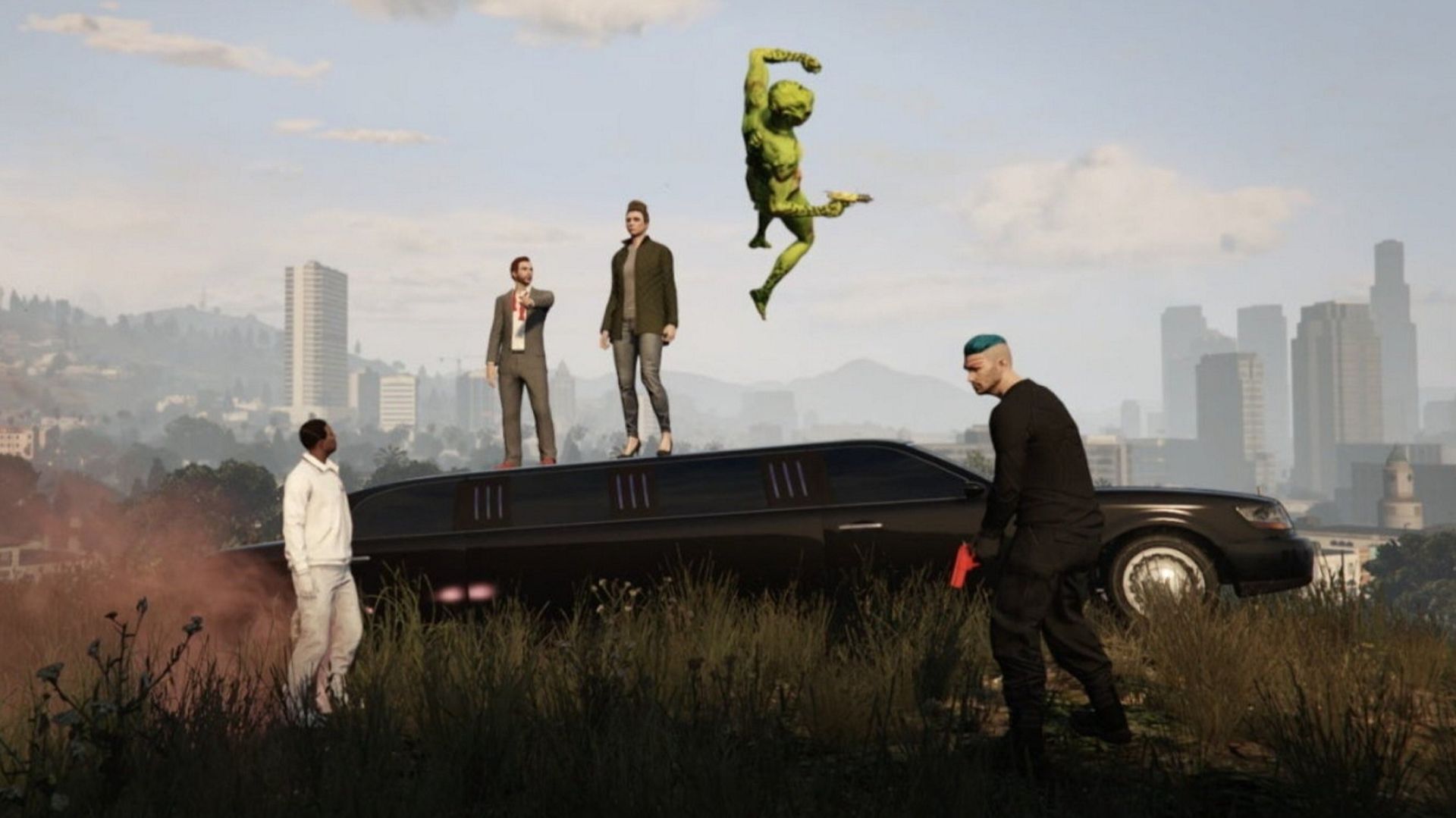
During England’s third, bleak pandemic lockdown, a pair of out-of-work actors hit on the idea of staging a full production of Hamlet while they were gaming. Their play, which was live streamed, won an innovation prize at The Stage Awards in London last year. It has now been turned into a documentary, Grand Theft Hamlet, that is a tribute to both the madness of elaborate lockdown projects and the possibilities of machinima.
Machinima (a misspelt portmanteau of machine and cinema) is a form of filmmaking that takes place inside video games.
Some are simple voice-overs recorded by gamers messing around. More elaborate examples include an Emmy-award-winning episode of South Park set among the orcs and gnomes of World of Warcraft and artist Brent Watanabe’s San Andreas Streaming Deer Cam, in which a computer-generated deer wanders serenely through a game cityscape listening to the babbling of NPCs (nonplayer characters).
The format comes with challenges. In Grand Theft Hamlet, the actors are constantly interrupted by violent police chases and robberies. At one point, Hamlet has to break his soliloquy to make a plea for audience members not to shoot one another until the performance has come to an end.
The obvious question is why? Why put so much effort into making films in a medium designed for mindless distraction? And why create something that relies on blocky computer graphics and stiff avatars that have trouble moving their features?
Jenna Ng, professor of digital media at the University of York, says one reason is accessibility. No expensive camera equipment is needed to make a film. And if the aesthetic is off-putting to some it’s why she loves them. “I find it beautiful because it is unlike anything else we see in our visual culture.”
Machinima is a niche pursuit, though popular enough to have its own film festival in Milan. It joins the ever-increasing number of crossovers between traditional art forms, mainstream entertainment and gaming. Shakespeare fans can also seek out the Nintendo Switch offers To Be Or Not To Be (tagline: “guide Hamlet, Ophelia and Hamlet Sr to hundreds of hilarious deaths”).
If you don’t play video games it can be hard to wrap your head around exactly how popular they are, let alone the idea that anyone could find them beautiful. But for several years now, gaming revenue has comfortably exceeded that of both film and music combined.
There was even a time when it seemed as if machinima might become a dominant form of entertainment. In the early 2000s, during the rise of LA’s “Silicon Beach” mixture of entertainment and tech start-ups, a company also called Machinima began collecting the films and putting them on YouTube. Its founder declared younger generations didn’t want to watch TV in the old way any more. But after a change of ownership, Machinima was shut down.
What has emerged since then are films with fewer online views but more cinematic ambition.
At a screening of Grand Theft Hamlet co-director Pinny Grylls explained their appeal as a uniquely modern art form. “I think it is the job of filmmakers to reflect the world people live in,” she said. “And many more people live, love and interact inside these game worlds.”