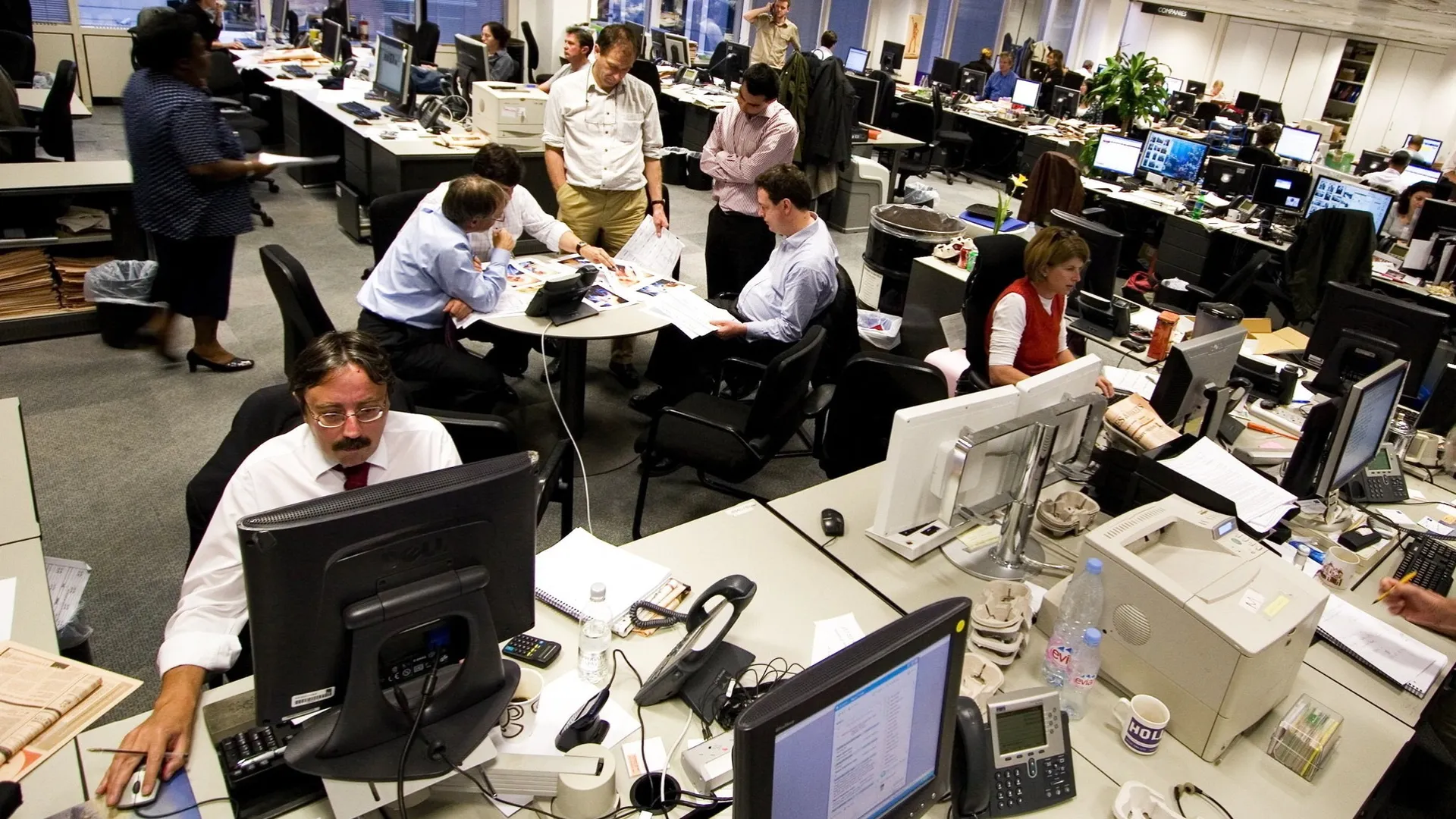
It is a tradition in British newspapers, dating back to the era of hot metal printing, to “bang out” cherished colleagues on their retirement, these days with a cacophony of hands beating on desks as they depart the newsroom for the last time.
When Andrew Slade, who has died aged 61, left the Financial Times in 2019 after 29 years, he was banged out not once, but twice. Suspecting the unassuming news editor would try to slip away unnoticed, colleagues erupted when he was spotted moving quietly out of the room late in the afternoon. The noise had barely subsided when he returned, abashed, to fetch his things. The second round was louder than the first.
The warmth of the send-off was a testament to the esteem and affection in which Andy, as he was universally known by his colleagues, was held at the FT.
Throughout a period marked by stock market bubbles, 9/11, the financial crisis, Brexit, the first Trump era, and much more, Slade was a reassuring figure at the heart of the newsroom. He had an unerring eye for accuracy, balance and tone, all dispensed with dry humour emanating from under his ample moustache.
“He was a kind, calm, unassuming man and a proper professional,” said financial columnist Katie Martin. “He didn’t monkey with your copy if it didn’t need it, but he did make your words better when it did. Lots of organisations hinge on quiet hard workers like that, and he was a prime example.”
Born in Portsmouth, Slade studied history at the London School of Economics, attracted to LSE in part by the fact that Mick Jagger had been there before him. He became a journalist, inspired by the film All the President’s Men, about the Washington Post investigation into the Watergate scandal. He started as a reporter for the Army Quarterly and Defence Journal before moving to Jane’s Defence Weekly, where he became chief subeditor.
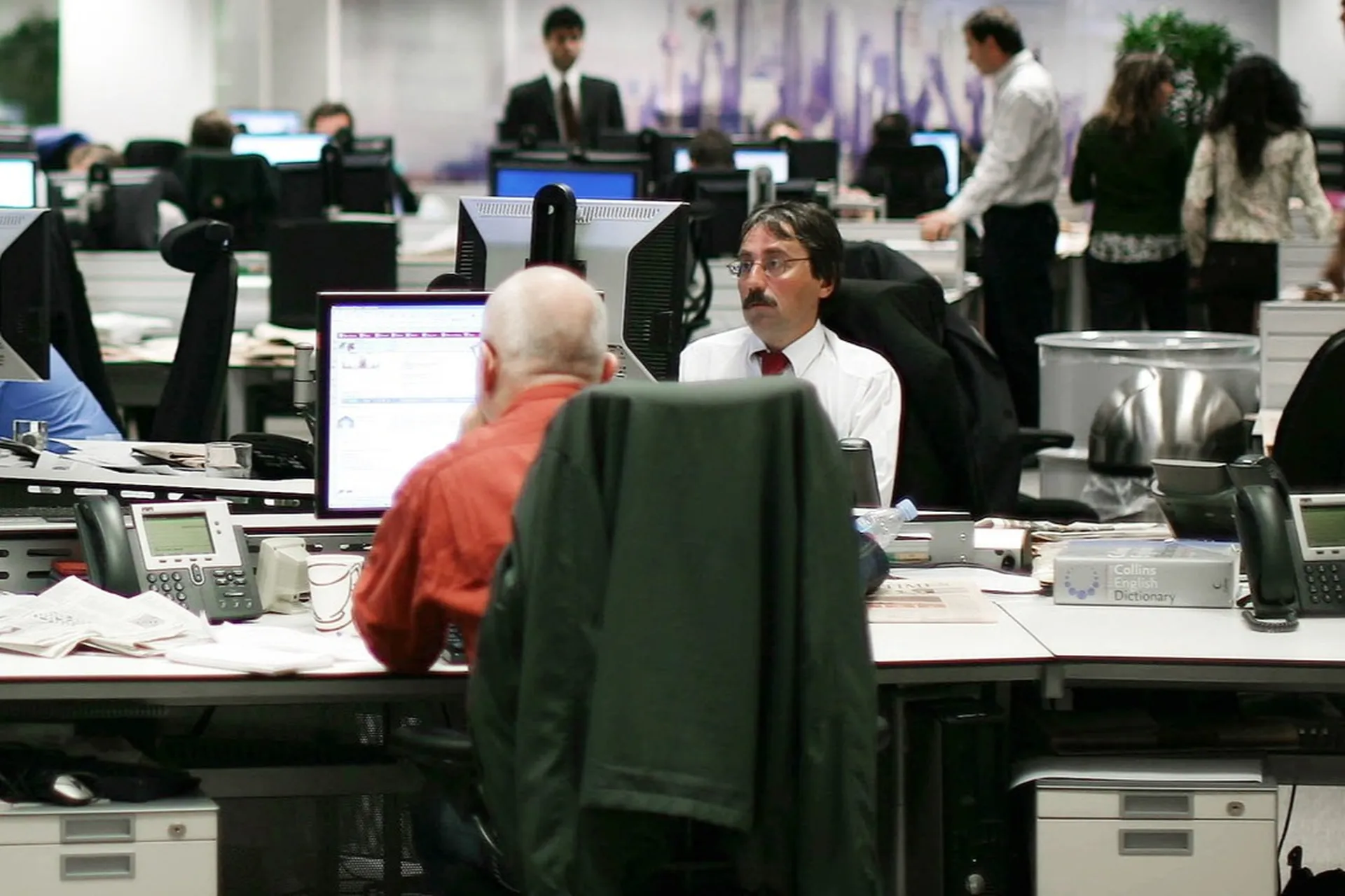
He joined the FT as a sub in 1990. He had ambitions to become a defence correspondent, but it was Slade’s skills as an editor and his understanding of corporate affairs that saw him rise to become head of the International Companies desk, Financial News Editor and News Editor of FT.com. In the latter job, he played an important role in helping the FT shift from a traditional printer of newspapers to 24-hour digital publishing.
The relationship between reporters and editors can be testy, but Slade had a knack for seeming supportive, even when surgery on the copy was required. Writers respected his deep knowledge of the corporate world (he anchored much of the FT’s coverage of the Enron scandal) and responded to his wry humour. He was greatly valued by young reporters for his tips and advice.
Barney Jopson, now a seasoned FT correspondent, recalled that Slade once cut a string of Morgan Stanley analyst comments out of an IPO story he had written as a rookie reporter. “He gently explained to me that their gushing exuberance was perhaps related to the fact that Morgan Stanley was underwriting the float. I never forgot the lesson.”
Another reporter remembered being called over after misspelling Vodafone as Vodaphone. “An ‘f’, not ‘ph’,” Slade admonished her. “Easy to remember. It’s ’effing Vodafone’.”
Slade enjoyed a happy family life. He and his wife Vanessa met at school and were married for 34 years. Slade was immensely proud of his children: Michael, a software developer and talented cricketer, and Miranda, a journalist like her father. Sometimes his sub’s instincts got the better of him in his eagerness to help the children. He once decided that Miranda’s geography homework assignment was “unforgivably bloated” at 400 words. “He stood over my shoulder and dictated rewrites. It didn’t get a very good grade if I recall correctly, but it was a very neat 150 words.”
The family enjoyed summer holidays together on Corfu, where Slade would indulge his abiding love of reading history. When he and Vanessa celebrated their 25th wedding anniversary, she gave a lovingly sentimental speech, reports Miranda. Slade responded with just five words: “You get less for murder.”
No one who knew him could miss Slade’s passion for cricket, football and other sports, notably American football. It was part of what made him a formidable pub quiz contestant. He was a devoted supporter of Queen’s Park Rangers, rarely missing a home game. Indeed, his fatal stroke occurred at a QPR game just before Christmas. In summer, post-retirement, he was to be found in the pavilion at the Oval, watching Surrey and England Test matches, meeting friends and colleagues for pints in the intervals.
He was never shy of expressing his frustration with the perceived shortcomings of sporting administrators and even his fellow fans. Irritated by a long rain break during a Test match in the summer of 2023, he messaged a friend: “People posing for selfies with Piers Morgan — I’ve seen enough. Retired to the pub.”