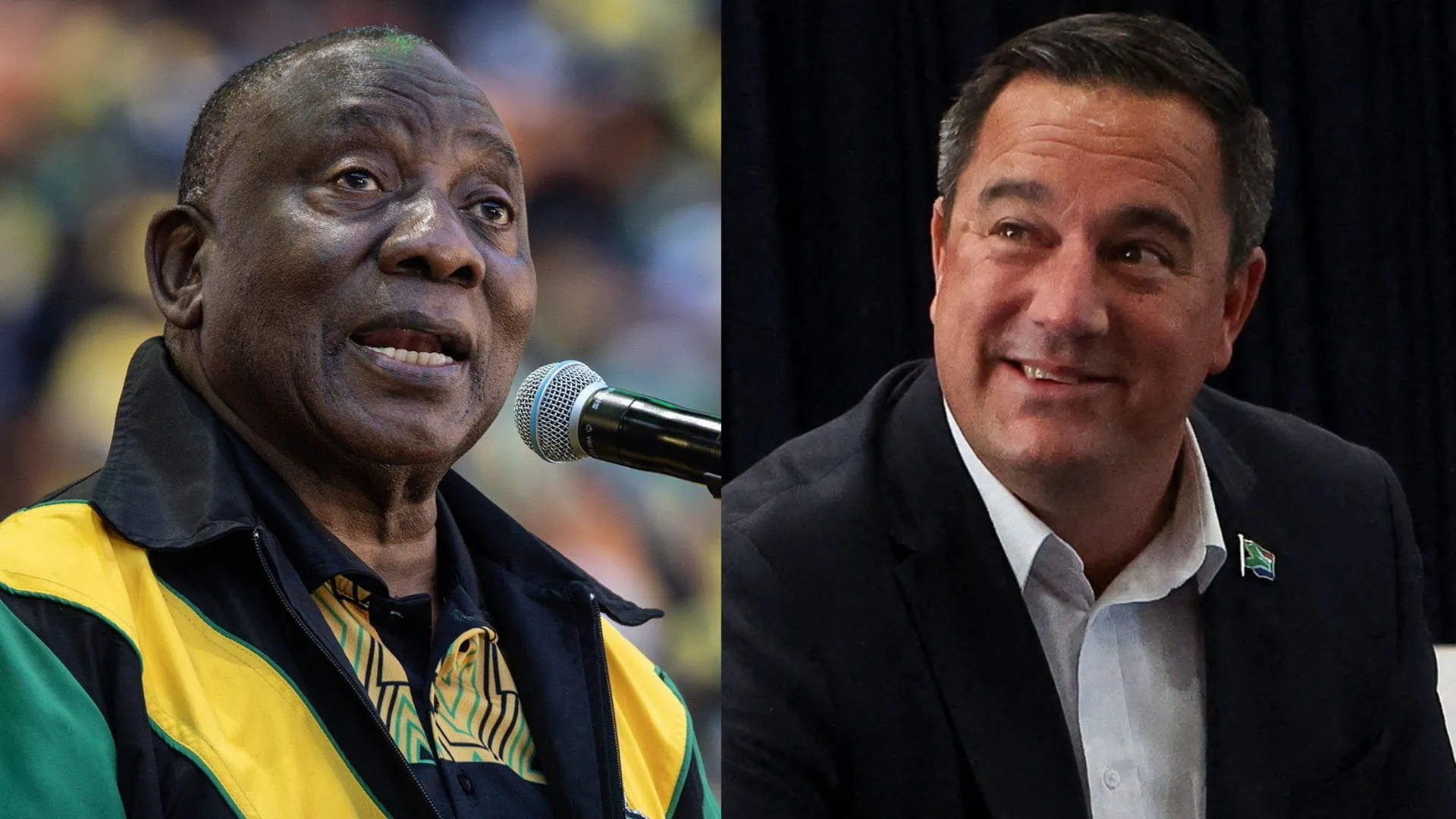
No one should underestimate the mini-miracle that has just occurred in South Africa. The African National Congress, a liberation party that has ruled unchallenged for 30 years, was humbled in a free and fair election last month. It accepted the result, eschewed a potential lurch into radical populism and set about forming a government of national unity in which its main partner will be the market-oriented Democratic Alliance.
The prospect of a centrist government bolstered by the DA’s proven administrative skills has energised investors. The rand and the stock market have rallied since the prospect of a coalition government became real. Investors who have not looked at South Africa seriously for 15 years are re-evaluating its prospects.
But if South Africa has taken the best of all possible post-election paths, no one should underestimate the magnitude of the challenge. The haggling over cabinet positions and more fundamental questions about how the coalition will run foreshadow the pitfalls ahead. It is still possible the DA could withdraw from the coalition altogether if it does not get the posts it believes it deserves.
Cyril Ramaphosa, the centrist president, probably sees working with the DA as a chance to neutralise the more radical wing of the ANC and to curb members who see politics as a means of enrichment. But it will not be easy to get the ANC and the DA to work together given their deep ideological divisions, with the DA keener on free enterprise and the ANC on state intervention.
Nor will it be easy to paper over internal divisions within the DA, whose leadership is split between those who see the coalition as a chance to exercise power and others who sense a trap. According to the latter view, the DA could lose its political identity by working with the ANC, which has nearly double the number of MPs. If the DA finds itself in a subservient role, sceptics argue, it could find itself either powerless to effect real change or scapegoated for everything that goes wrong.
The immediate fight has been over cabinet posts. The DA wanted 12. It will get six if it is lucky. Now the struggle is over ministries. In the latest twist, Ramaphosa is seeking to unpick an agreement that would have seen the DA head the powerful trade and industry ministry. Some ANC cadres cannot stomach the idea of a market-focused party running a ministry that has championed industrial policy, albeit without obvious success.
Beyond the immediate bartering lies a more fundamental question of whether the DA can run ministries as it wishes or will have to bow to ANC diktat. It has already withdrawn its objection to a minimum wage and to black empowerment legislation that it regards as prone to corruption and inefficiency. Other battles lie ahead, particularly over so-called cadre deployment (parachuting unqualified party hacks into jobs) and the ANC’s ties with unions that often block attempts to reform sectors such as education.
There is a yet bigger obstacle ahead. That is the sheer difficulty of conjuring the rapid growth necessary to tackle the profound economic and social divisions that make South Africa the most unequal society in the world. If 30 years of state intervention have been unable adequately to address the legacy of apartheid, a system that deliberately engineered a Black underclass, it is far from clear that a few market reforms will do the trick either.
In five years’ time, the danger is that, even if the coalition holds steady, not enough progress will have been made to convince a skittish electorate. If that is the case, voters may turn to parties offering more populist, but ultimately more dangerous, solutions.